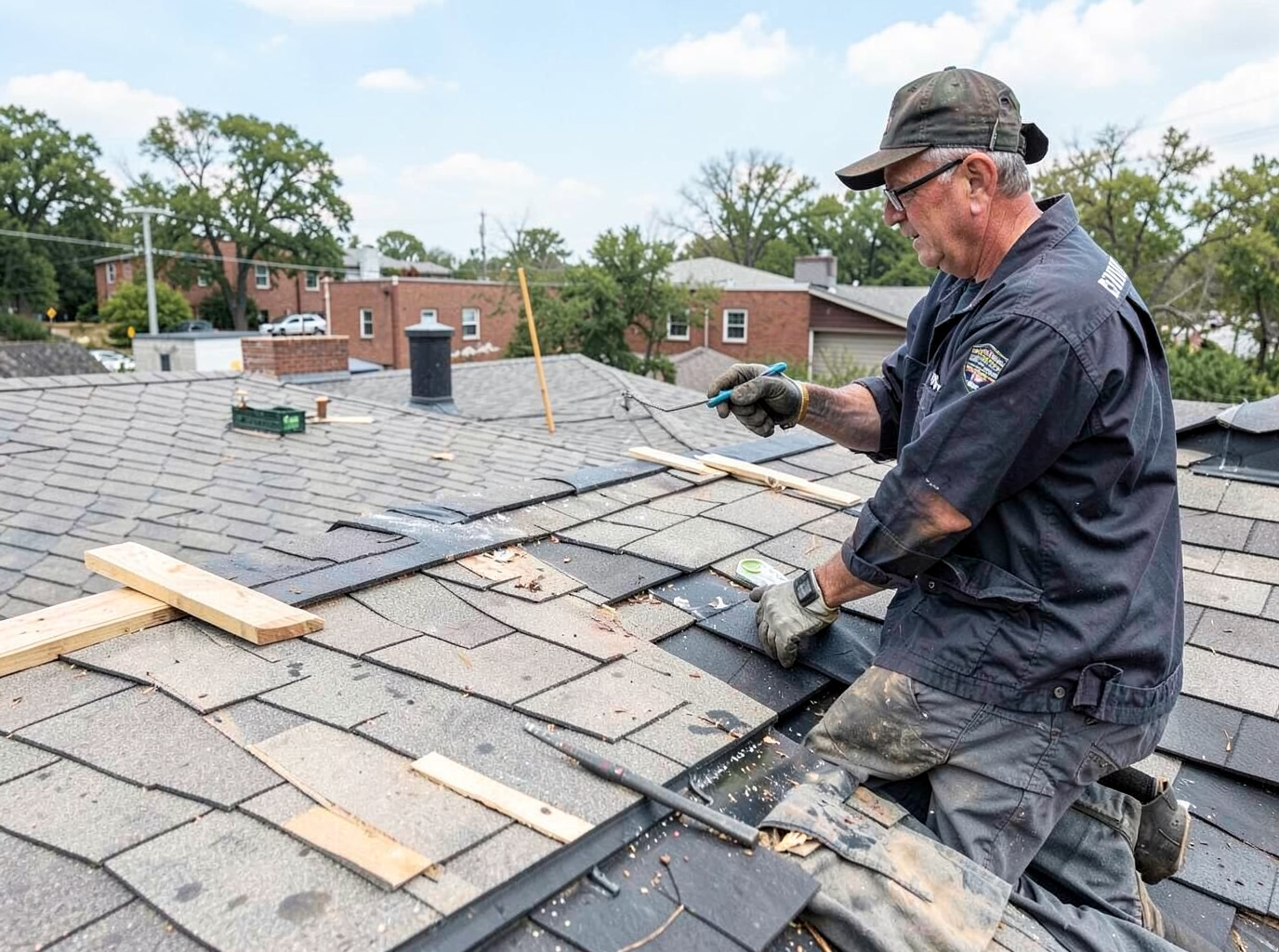
Blue Mound sits south of Decatur along IL Route 48 in Macon County. Homes here range from early 1900s farmhouses to mid-century builds on smaller village lots. Winters bring freeze-thaw cycles that crack shingles and ice dams form along eaves, while summer storms drop heavy rain that tests older flashing around chimneys and valleys. A Decatur-based roofing contractor reaches these properties quickly via Route 48 and works around narrow driveways and mature trees that limit equipment access.
Roof slopes in Blue Mound often face open fields, so wind uplift hits harder than in denser Decatur neighborhoods. Asphalt shingles remain the common covering, yet many need full replacement once layers exceed local weight limits. Crews stage materials in the street or backyard and protect nearby gardens during tear-off. The same weather patterns that affect nearby Forsyth and Mount Zion apply here, but the rural setting adds extra drying time after rain before new underlayment goes down.
Access to attics for ventilation checks is straightforward in most Blue Mound homes, yet low-pitch roofs near the railroad tracks collect leaves and debris that trap moisture. Local roof work focuses on ice-and-water shield along eaves and proper ridge vent installation to handle both summer heat and winter cold.
Around Blue Mound, IL
We regularly work near:
- 📍Blue Mound Park
- 📍IL Route 48
- 📍Meridian Elementary School
- 📍Village Hall on Main Street
- 📍Railroad crossing south of town
Roofing Contractor in Blue Mound, IL — Local Notes
- •Older wood-frame homes along Main Street and Prairie Street often have multiple shingle layers that must be removed before new underlayment.
- •Open fields west of the village increase wind exposure on south-facing slopes, requiring extra fasteners on ridge cap and perimeter shingles.
- •Narrow lots near the village park limit dumpster placement, so crews use tarps and daily debris removal to keep streets clear.
- •Freeze-thaw cycles from Macon County winters lift flashing around chimneys on homes built before 1960, leading to targeted leak repairs each spring.